A global power
Constitutional Monarchy Takes Shape
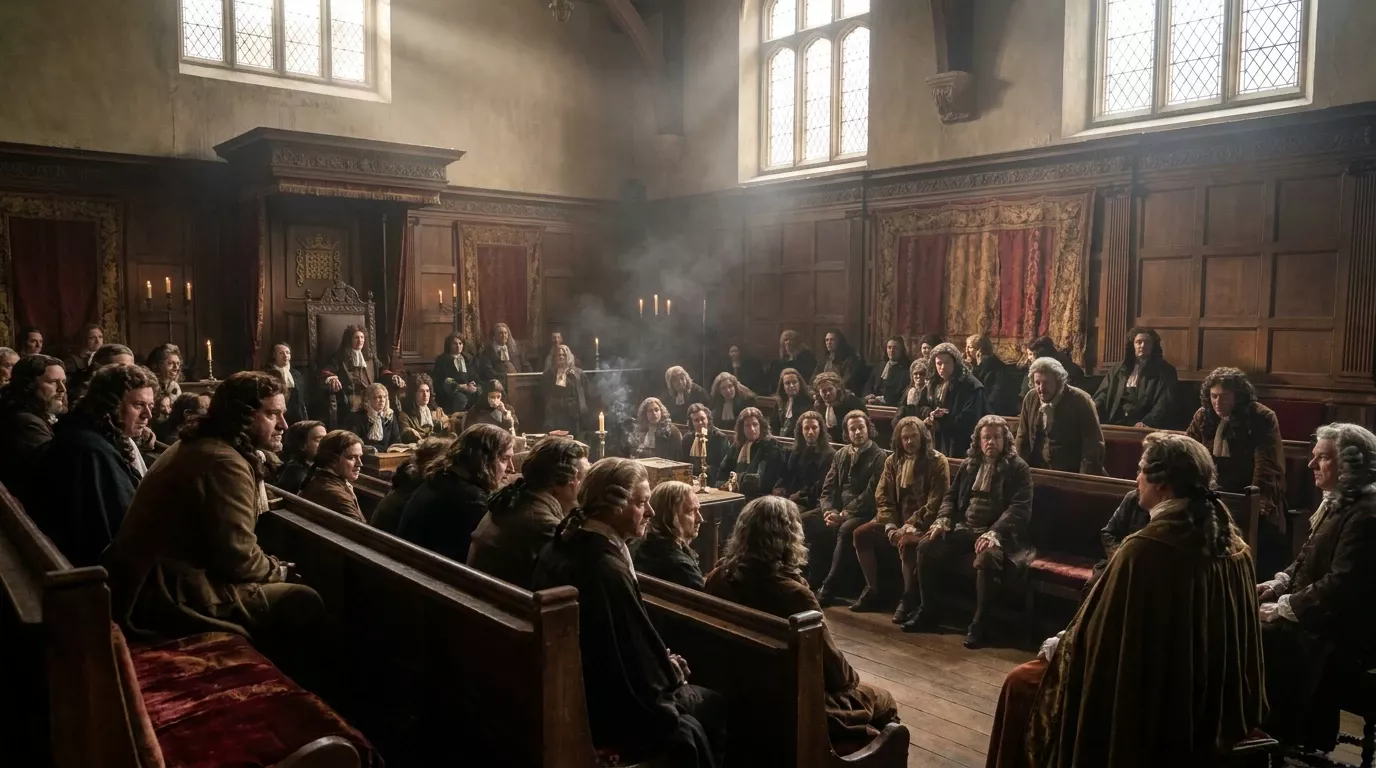
After the Glorious Revolution, the Bill of Rights (1689) changed everything. The king could no longer:
- Raise taxes without Parliament's say-so
- Keep a standing army without annual approval
- Ignore the law
Parliament now decided who could be monarch, and the monarch had to be a Protestant. Elections had to happen at least every three years. This was the birth of constitutional monarchy.
Party Politics Begins
Two groups emerged in Parliament: the Whigs (who later became the Liberal Party) and the Tories (the Conservative Party today). This was the beginning of party politics.
A Free Press
From 1695, newspapers could operate without a government licence. This was the start of a free press — newspapers and publications not controlled by the government. More and more newspapers began to appear.
Population Change
The first Jewish settlers since the Middle Ages arrived in London in 1656. Between 1680 and 1720, Huguenots (French Protestants fleeing persecution) came to Britain. Many were skilled and worked as scientists, bankers, and weavers.
The Act of Union (1707)
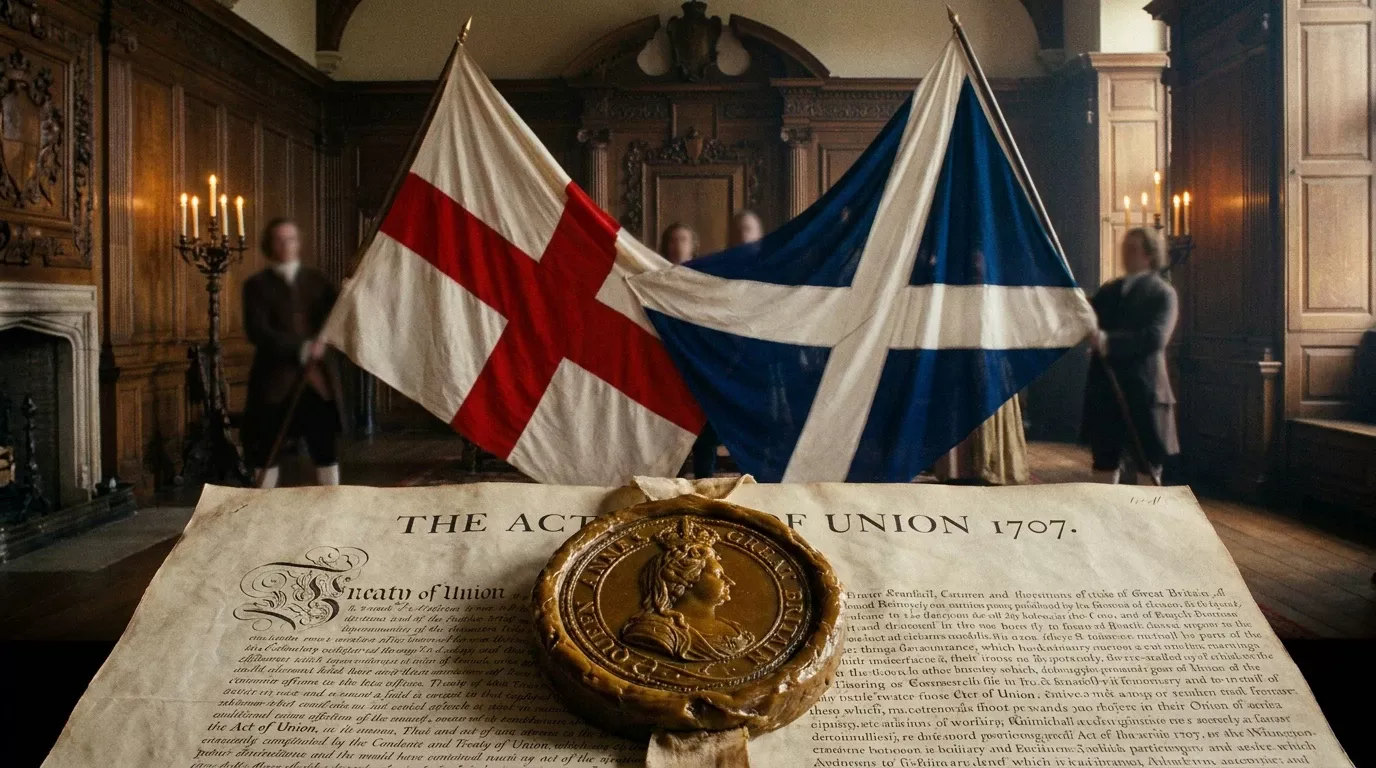
When Queen Anne died without children, there was uncertainty about who would follow her. The Act of Union in 1707 joined England, Wales, and Scotland into the Kingdom of Great Britain. Scotland kept its own legal system, education system, and Presbyterian Church.
The First Prime Minister
George I was German and did not speak good English. He relied heavily on his ministers. The most important became known as the Prime Minister. The first to hold this title was Sir Robert Walpole (1721-1742).
Bonnie Prince Charlie
In 1745, Charles Edward Stuart (Bonnie Prince Charlie) led a Scottish Jacobite rebellion trying to put a Catholic king back on the throne. It was defeated at the Battle of Culloden in 1746 — the last battle fought on British soil.
The Enlightenment
The 1700s were a time of new thinking called the Enlightenment. Key ideas: everyone has the right to their own political and religious beliefs, and the state should not control what people think. Famous Scottish Enlightenment thinkers included David Hume (philosopher) and Adam Smith (economist who wrote The Wealth of Nations).
The Industrial Revolution
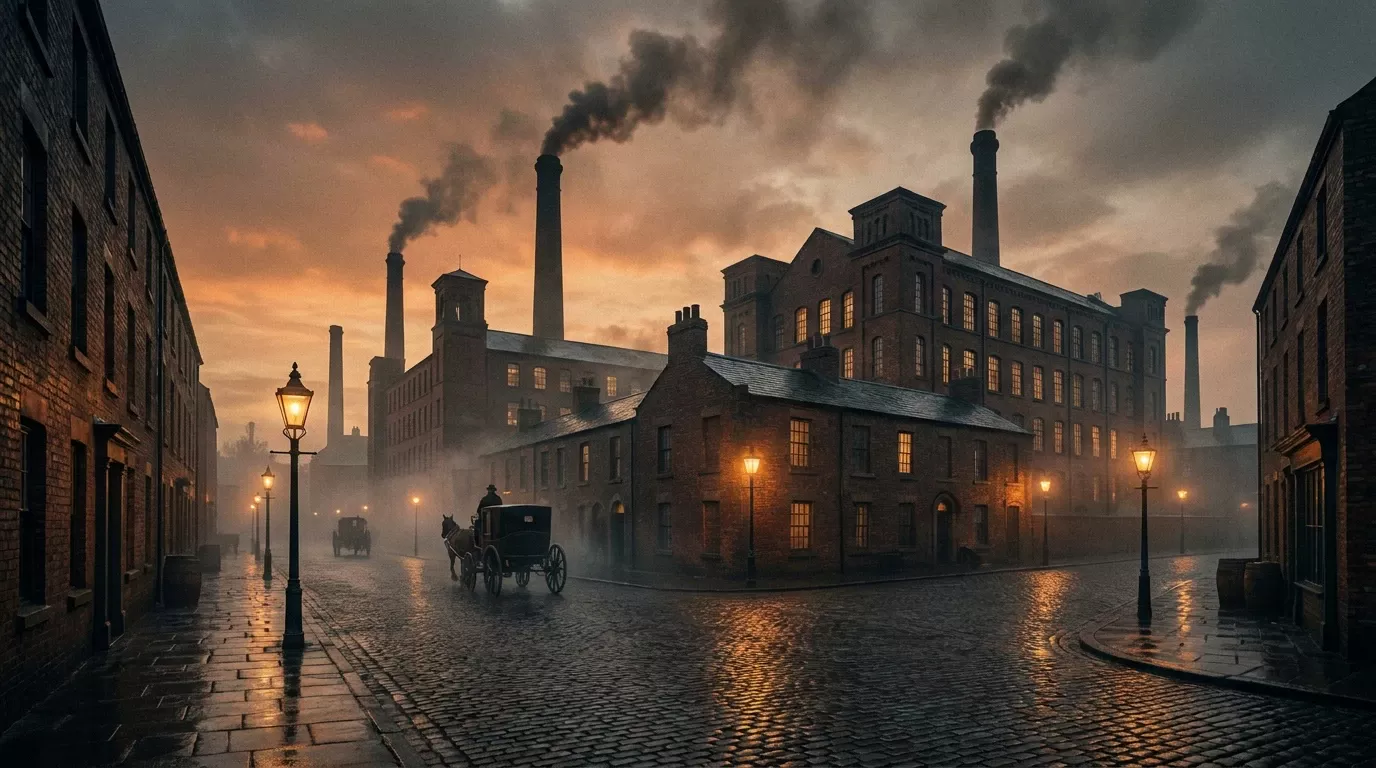
Britain led the world in industrialisation. New inventions like the steam engine (improved by James Watt) powered factories. Coal, iron, and textiles boomed. Canals and railways transformed transport. Richard Arkwright's water frame revolutionised cotton production.
The Slave Trade
Britain was deeply involved in the transatlantic slave trade. Ships carried enslaved Africans to the Americas. The campaign to end it was led by William Wilberforce and the Quakers. The slave trade was abolished in 1807, and slavery itself was outlawed in the British Empire in 1833.
The Victorian Age
Queen Victoria reigned from 1837 to 1901 — the longest reign of any British monarch at that time. Britain became the wealthiest and most powerful nation on earth, with an empire that covered a quarter of the world's land.
The Reform Acts gradually gave more men the right to vote. By the end of Victoria's reign, Britain was much more democratic — but still nowhere near "one person, one vote."
The Crimean War (1853-1856) was fought against Russia. Florence Nightingale became famous for her nursing work during this war.